
Prefabricated house types 2026: overview, prices and comparison
Choosing the right house type is a central planning decision. Explore modern prefabricated houses and find the design that suits your budget and lifestyle.
The main house types at a glance
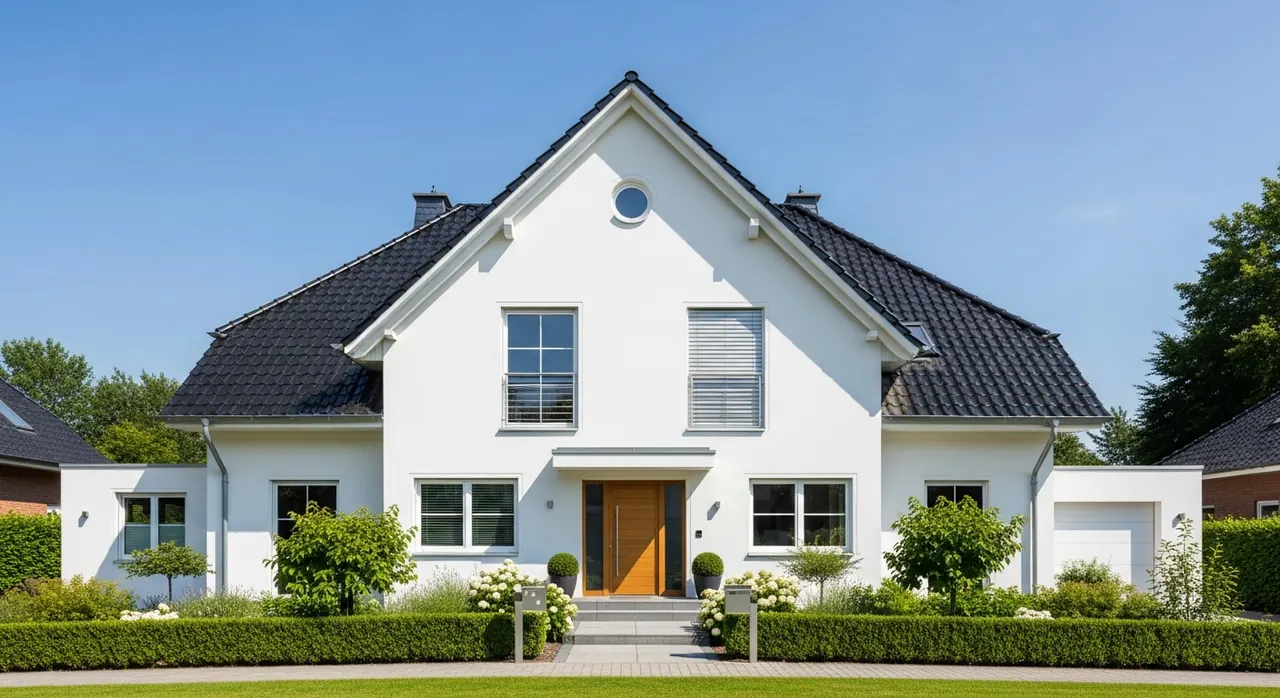
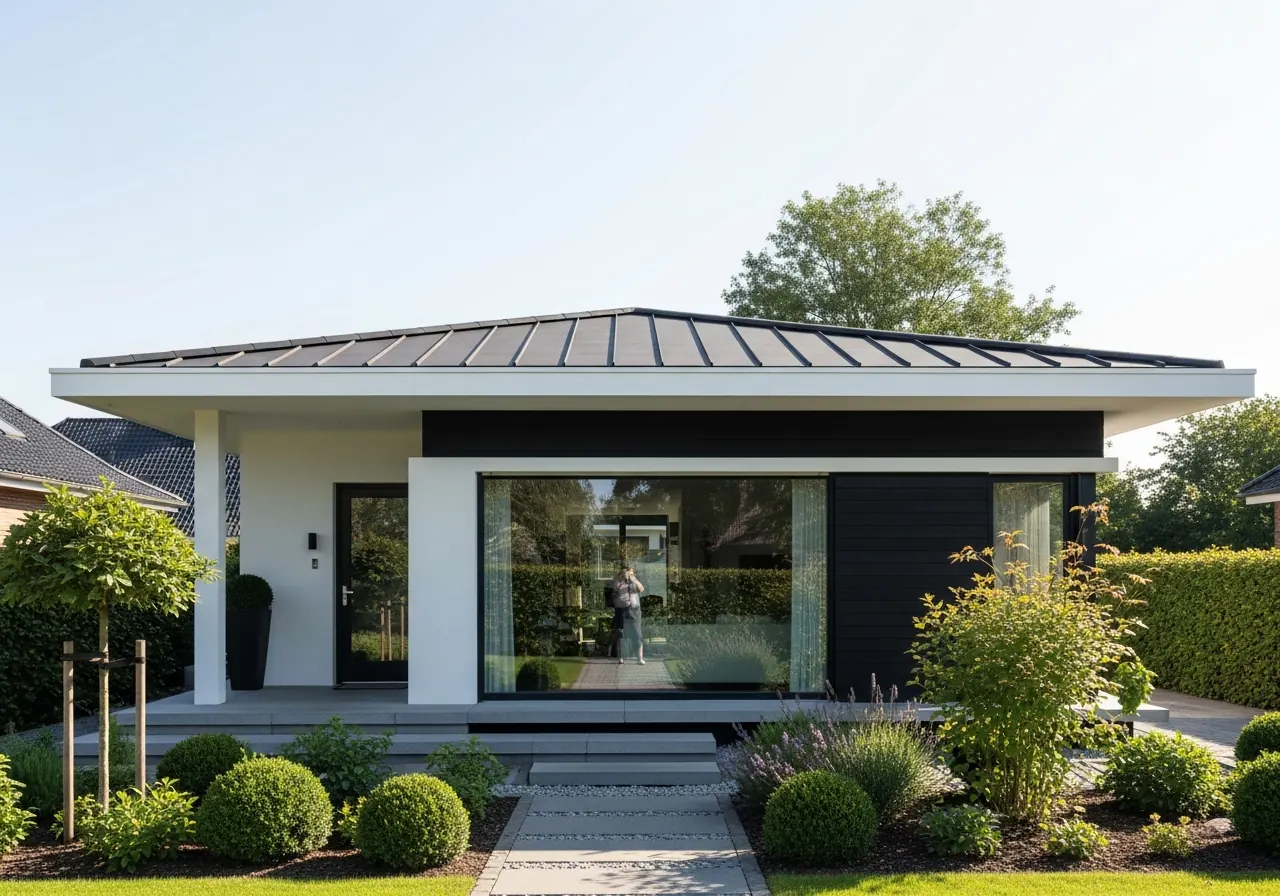
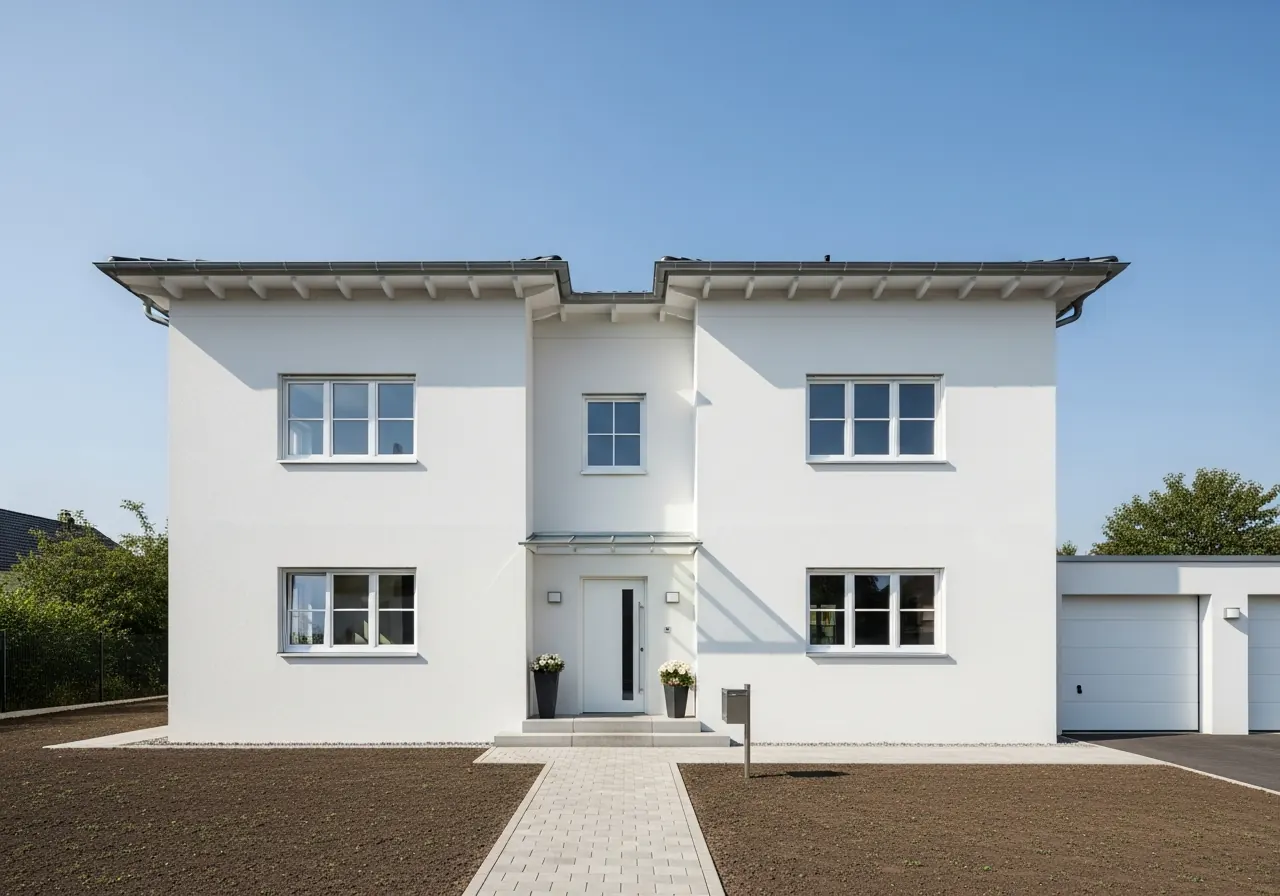
The main prefabricated house types in 2026 are detached houses, bungalows, semi-detached houses, two-storey villas and shell-finish houses. Entry prices range from €190,000 for a shell-finish home to €320,000 for a two-storey villa. Your choice depends on the plot, stage of life, budget and accessibility needs: a bungalow supports step-free living, a semi-detached house reduces land costs, a two-storey villa maximises living space across two floors, and a shell-finish house reduces construction costs through DIY work.
Compare all house types: living area, prices and suitability
| House type | Living area | Price from | Suitable for | Detail page |
|---|---|---|---|---|
| Detached house | 120–160 m² | €250,000 | Families with children | View details |
| Bungalow | 80–130 m² | €230,000 | Older buyers, accessible living | View details |
| Semi-detached house | 100–130 m² per half | €210,000 | Young families, urban locations | View details |
| Two-storey villa | 150–200 m² | €320,000 | Upscale living | View details |
| Solid prefab house | 100–160 m² | €270,000 | Masonry fans, value retention | View details |
| Shell-finish house | 100–160 m² | €190,000 | Skilled DIY buyers | View details |
Entry prices for 2026 show the least expensive completion level for each house type and exclude the plot and ancillary building costs. See the detail pages for complete price tables.



What a house type determines
Together with the construction method, the house type determines the finished appearance, division of living space and cost calculation. An industrially produced prefabricated house may be planned as a detached home, two-storey villa, semi-detached house or single-storey bungalow. Footprint, storey height and roof shape vary by type. Around 80 percent of new-build customers also choose turnkey construction, meaning handover with the interior complete. This does not generally alter the house type, but it affects the contract and warranty arrangements.
See How much does a prefabricated house cost? for the effect of house type, living area and specification on the budget, or browse the prefabricated-house catalogues for 2026.
Which house type suits me?
Three questions provide a shortlist. How large is the plot? Small, expensive urban plots favour a two-storey villa or semi-detached house, while a generous rural plot can accommodate a bungalow. What is your stage of life? Families generally choose a classic detached house; buyers planning for long-term accessibility favour one level. How much can you do yourself? Skilled buyers can save 15 to 20 percent with a shell-finish house; everyone else gains greater certainty from turnkey handover.
Frequently asked questions about house types
What types of prefabricated house are available?
The main house types in 2026 are detached houses, bungalows, semi-detached houses, two-storey villas and shell-finish houses. Construction variants include timber and solid prefabricated homes, alongside turnkey completion. Each type has a detail page with price tables and providers.
Which house type is the least expensive?
With prices from €190,000, the shell-finish house is least expensive because buyers complete the interior themselves. Among turnkey types, a compact bungalow starts at €230,000, followed by a detached house at €250,000.
Which house type is suitable for accessible living?
A bungalow: every room is on one level, there are no stairs, and DIN 18040-2 dimensions can be incorporated without compromising the layout. Many providers offer dedicated accessible bungalow ranges with level-access showers and wide doors.
What does each prefabricated house type cost?
Entry prices for 2026 are: shell-finish house from €190,000, semi-detached half from €210,000, bungalow from €230,000, detached house from €250,000, solid prefab house from €270,000 and two-storey villa from €320,000. All exclude the plot and ancillary building costs of 15 to 20 percent.
Which house type needs the smallest plot?
A semi-detached house. Its shared party wall and divided plot mean that 250 to 350 m² per household is often enough. A two-storey villa also uses a small plot efficiently by building upwards. A bungalow requires the largest footprint.
How do construction costs differ between house types?
The principal cost factors are footprint, number of storeys and roof shape. A bungalow has the highest cost per m² because its roof and slab are large relative to its living area, while a two-storey villa spreads roof and foundation costs across two floors. A shared wall reduces semi-detached costs by 10 to 15 percent; DIY work cuts shell-finish costs by 15 to 20 percent.
Undecided? Use our configurator
Answer five short questions and we will show you the house types that best match your plans.
Start configuratorQuick links to the key topics
The most popular starting points for prefabricated houses — direct links to providers, house types, prices and construction methods.
